

Why Trauma-Informed Yoga Can Support Healing
“Overcoming the effects of trauma is a process of reclaiming the body through a sense of agency in the body, support a healthy functioning of the nervous system, and connection”
Trauma Is a Whole-Body Experience
Trauma isn’t only a past experience, its imprint lives in the body.
After a traumatic event, it’s normal to experience stress responses like anxiety, hypervigilance, sleep disruption, or emotional numbness. When these responses persist, they can significantly impact quality of life and therefore affecting relationships, physical health, and the ability to feel relaxed or at ease.
Research shows that trauma can cause the nervous system to remain “stuck” in survival mode. This often shows up as:
Chronic tension or pain
Heightened reactivity to stress and stimuli
Difficulty resting or relaxing
Disconnection from bodily sensations and sense of self
In these states, even calm or rest can feel unsafe to the system.
Why the Body Matters in Trauma Healing
Trauma memories are often stored at a sensory and physiological level, not just as experiences we can think our way through. This is why body-based approaches can be so effective.
Trauma-informed yoga works by gently supporting:
Nervous system regulation
Interoceptive awareness (the ability to feel and interpret internal body sensations)
A sense of choice, agency, and control
Safe reconnection with the body
Studies show that trauma-informed yoga can reduce symptoms of post-traumatic stress, improve sleep, decrease reactivity, and help people feel more at home in their bodies, with outcomes comparable to more traditional therapeutic approaches for some individuals.
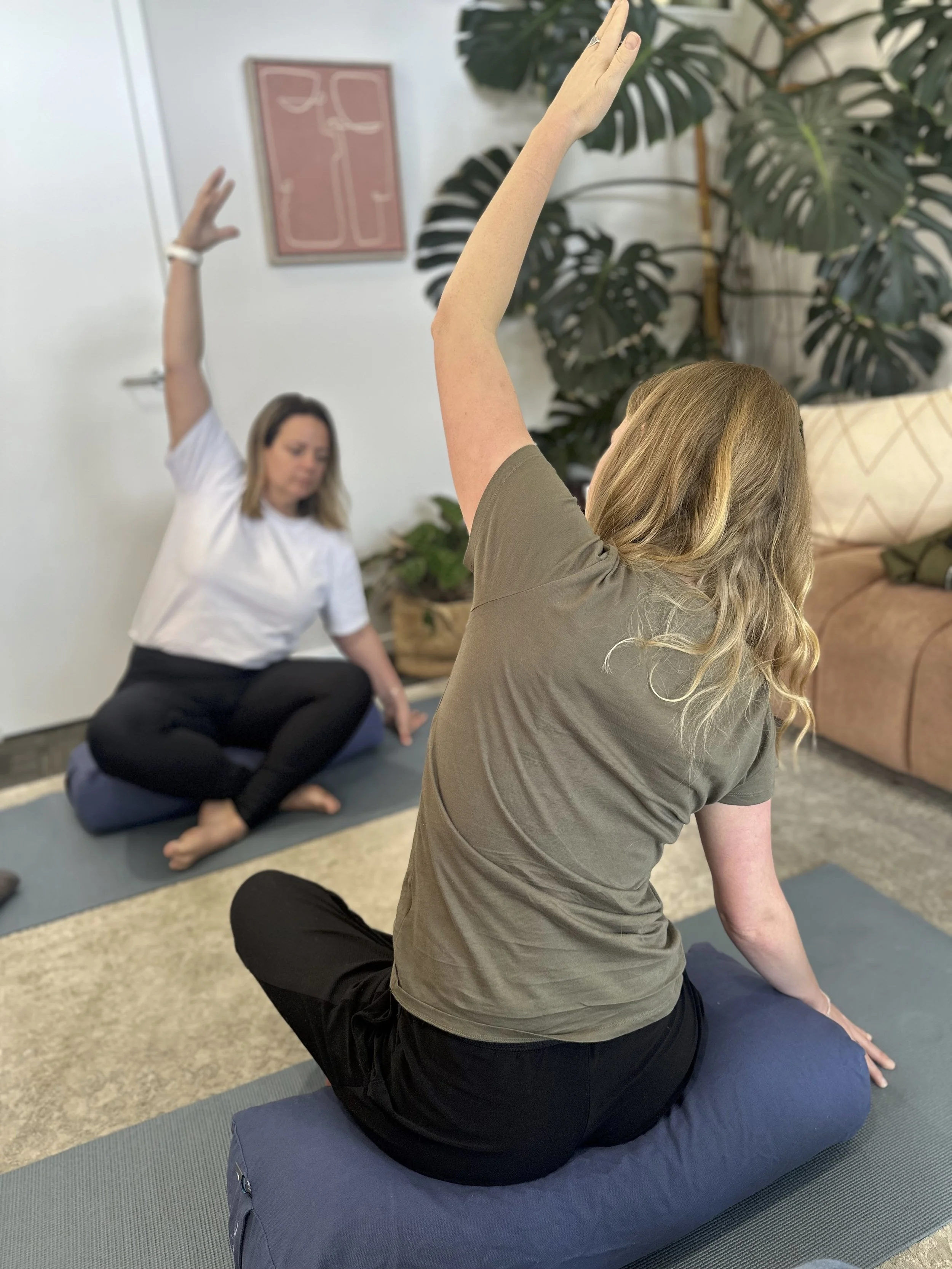
“Habitual response patterns can be interrupted, and new patterns can be created.”
A Nervous System Perspective
From a physiological standpoint, trauma can be understood as a sensitized autonomic nervous system, one that is constantly scanning for danger, even when none is present. Over time, this can limit access to states of safety, connection, and restoration.
Trauma-informed yoga offers a way to gently interrupt these habitual survival patterns and support the nervous system in learning flexibility again, moving between activation and rest with more ease.
Through personalized, body-based practices and nervous-system-informed support, trauma-informed yoga therapy can help people rebuild trust in their bodies and themselves, and feel what is possible.
Interested in Exploring This Work?
If you’re curious about 1:1 trauma-informed yoga therapy or somatic support, our Body-Mind Therapy practitioner, Richelle Muscroft, offers a complimentary 20-minute compatibility call. This is a space to ask questions, share what you’re hoping for, and see if this approach feels like the right fit for you.
You don’t have to do this alone - support is available, and healing is possible.
